Dorothy Parkers Ashes Could Be Again.
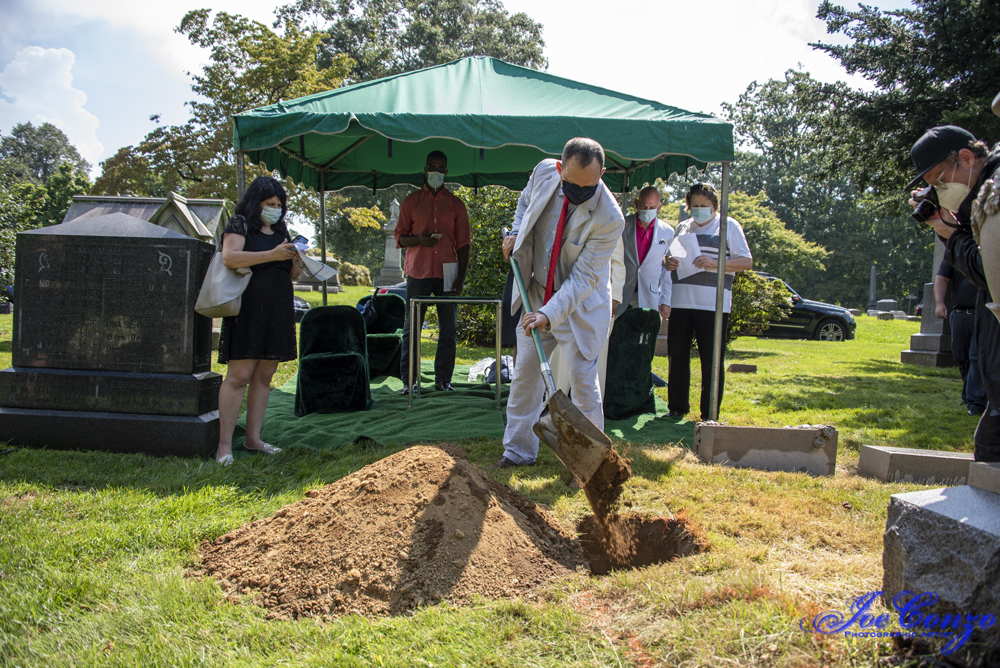
Dorothy Parker has come habitation to New York. On August 22–the 127th anniversary of her birth–the poet'south cremains were cached in Woodlawn Cemetery in The Bronx abreast her parents and grandparents. In a small individual anniversary witnessed by less than 12 people, the urn containing Mrs. Parker'south cremains ended a 53-year odyssey.
The story was revealed Friday in The New Yorker. Parker contributed a review in the mag's debut upshot in Feb 1925 and wrote for it for 30 years.
I was the representative of the Rothschild family descendants, who could not travel due to COVID-19 restrictions. I welcomed Dr. Hazel Dukes representing NAACP Empowerment Programs, Inc. and Parker's estate; Bill Zeffiro for the Dorothy Parker Lodge, and Susan Olsen, Barbara Selesky, and Meg Ventrudo from the Woodlawn Cemetery and Conservancy.
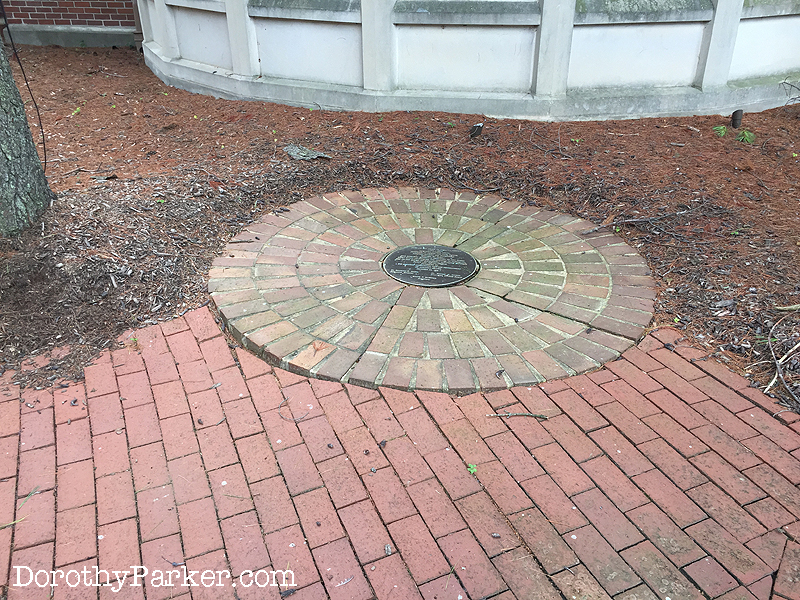
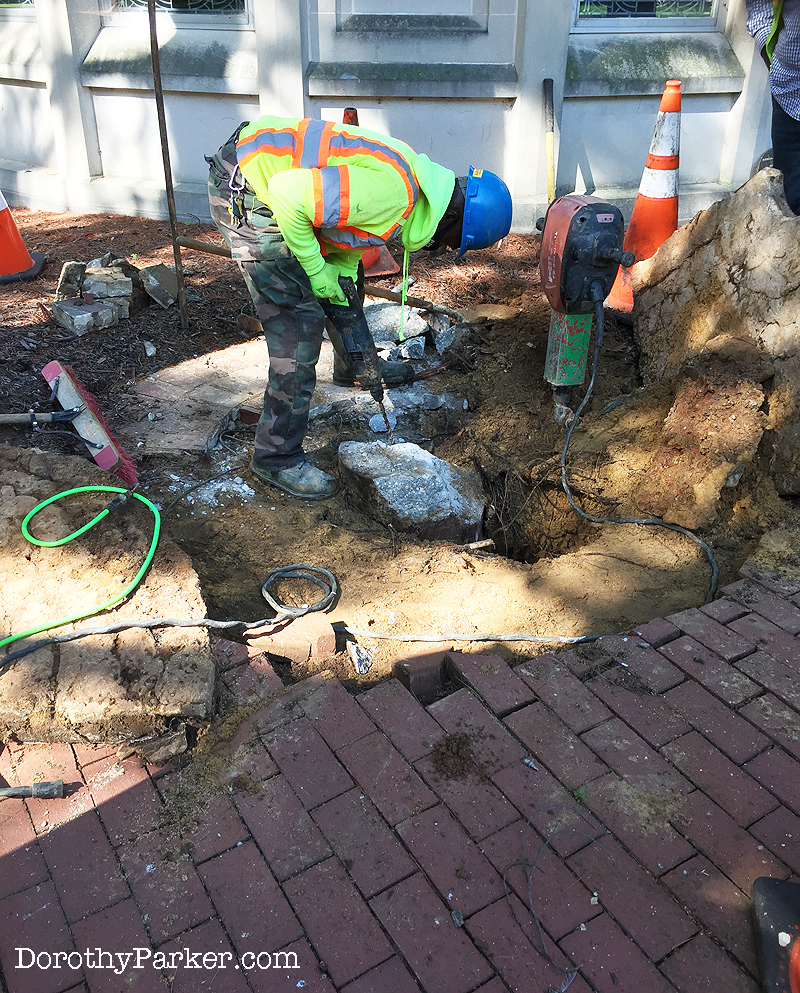
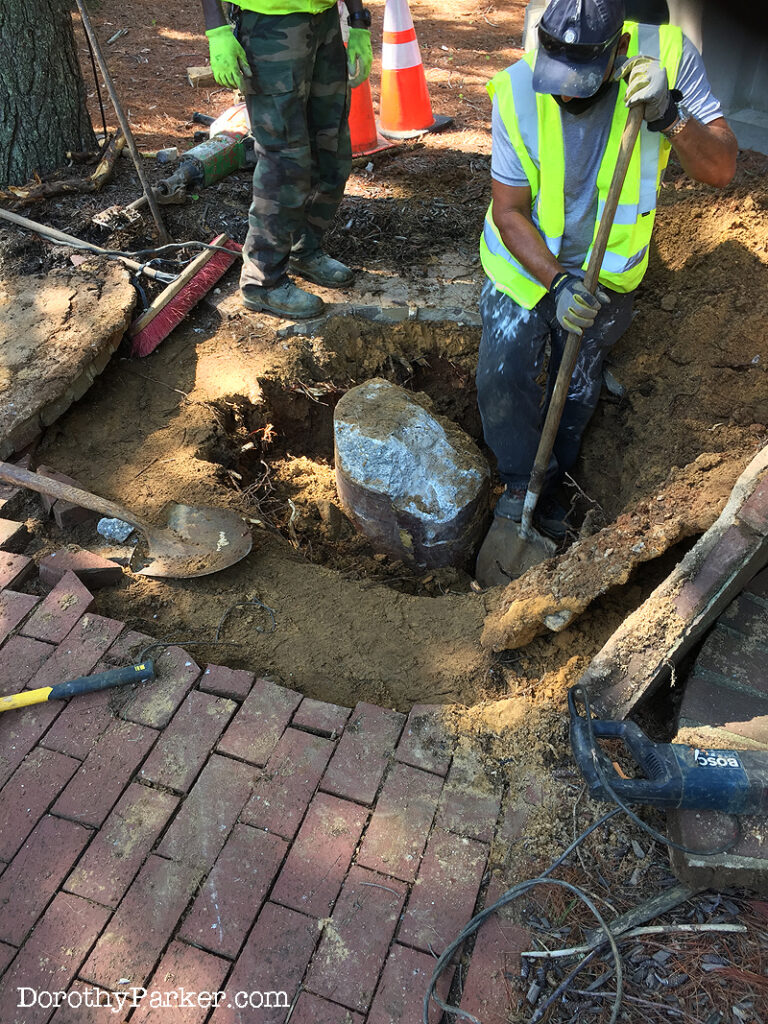
This completes the journey of the cremains that started with Parker's cremation at Ferncliff Cemetery in Hartsdale, New York, on June 8, 1967. Parker'due south executrix, fabulist-author-playwright Lillian Hellman, never collected the urn. Years afterwards it was sent to the constabulary offices of Parker's deceased lawyer's partner, Paul O'Dwyer. The urn stayed in his Manhattan filing cabinet until 1988, when it was brought to the Algonquin Hotel and turned over to the NAACP, which controls the Parker estate. The urn was brought to Baltimore and placed in a specially designed Memorial Garden at its national headquarters in October 1988. Vi months agone the NAACP moved out of its headquarters and into an office tower in downtown Baltimore. The Rothschild family descendants had been making inquiries since 2006, which ultimately led to the transfer of the cremains.
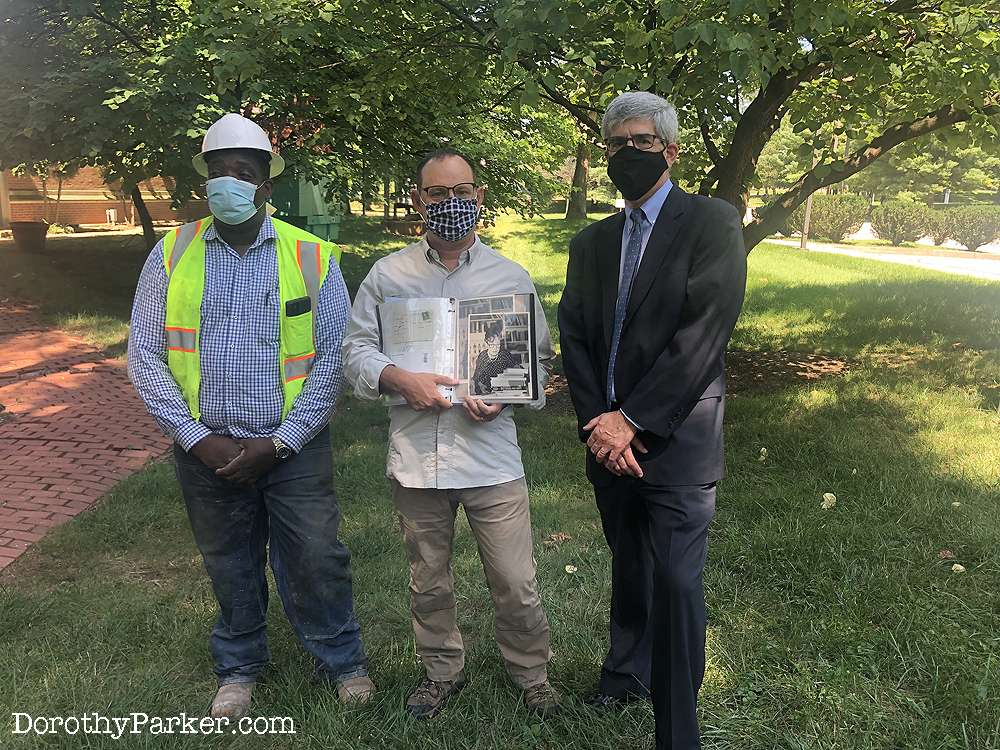
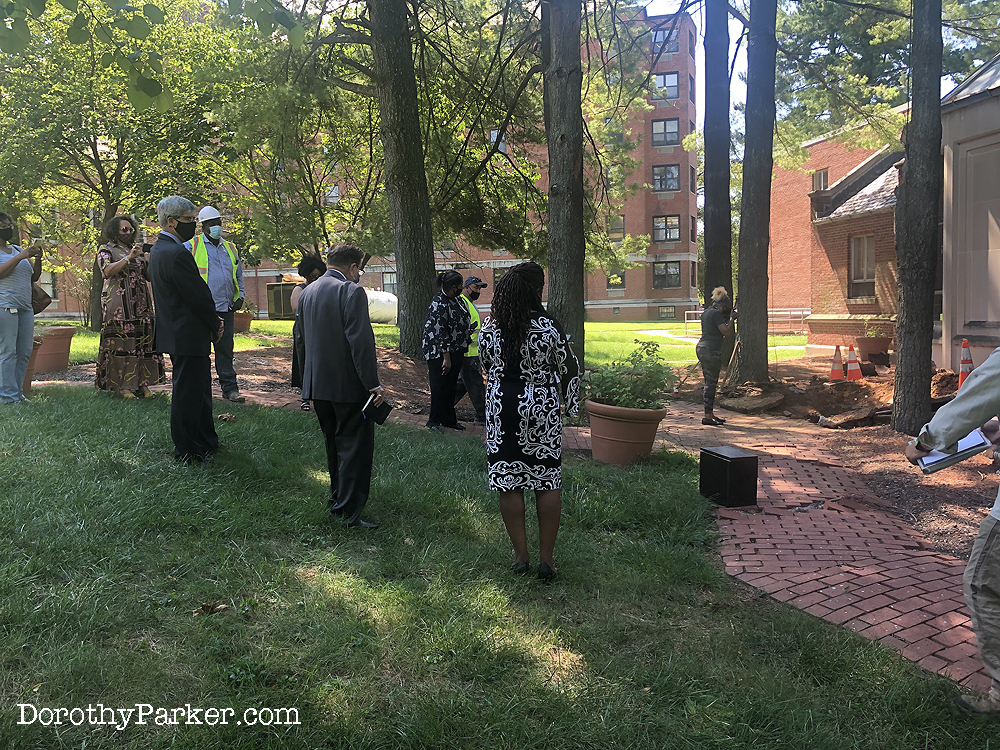
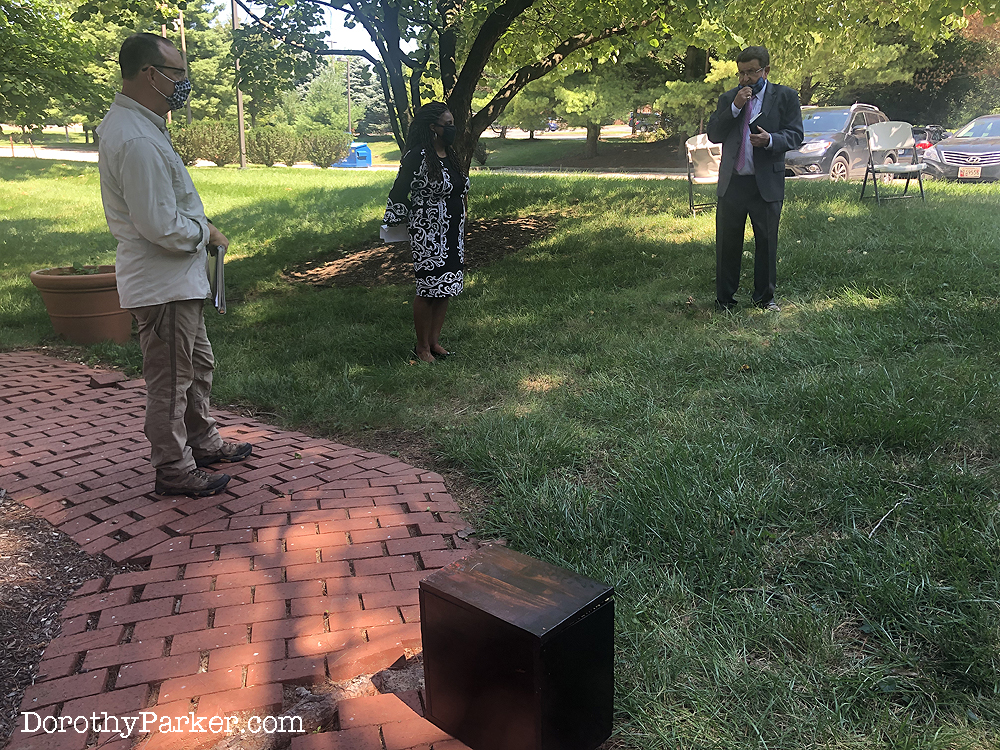
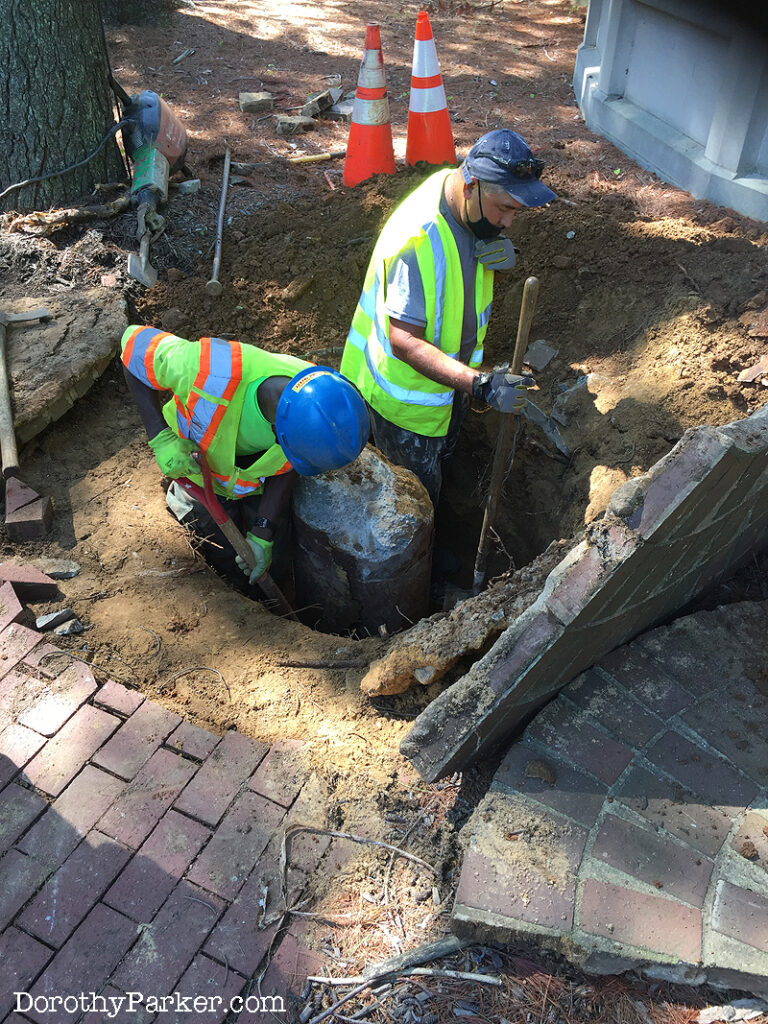
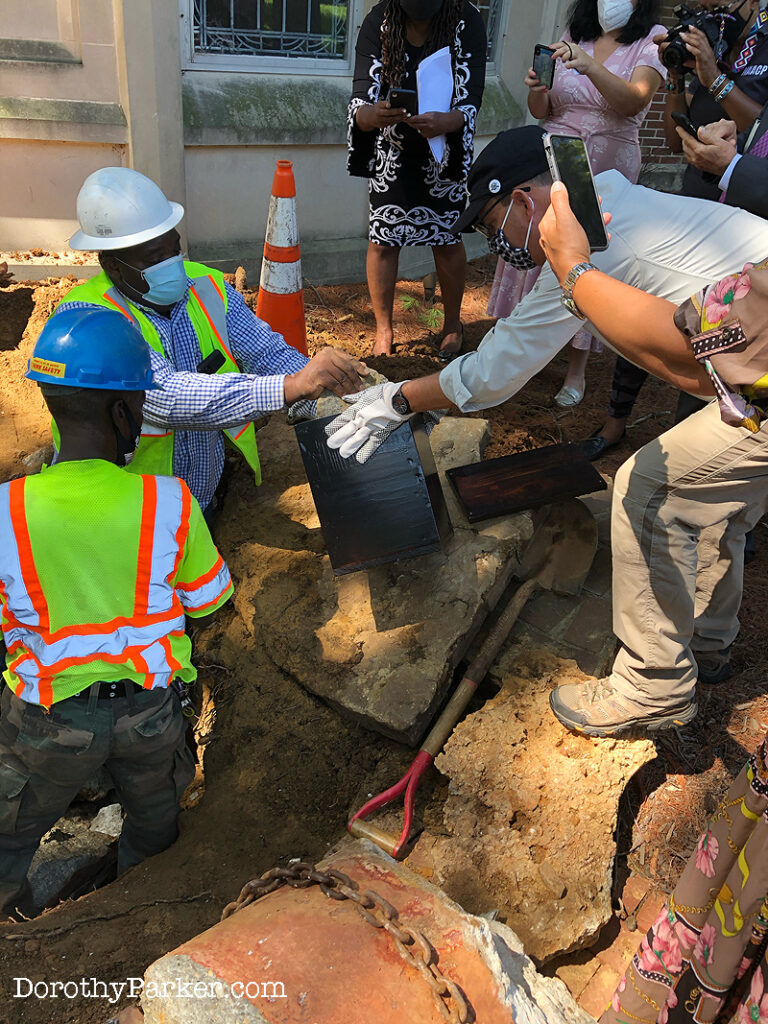
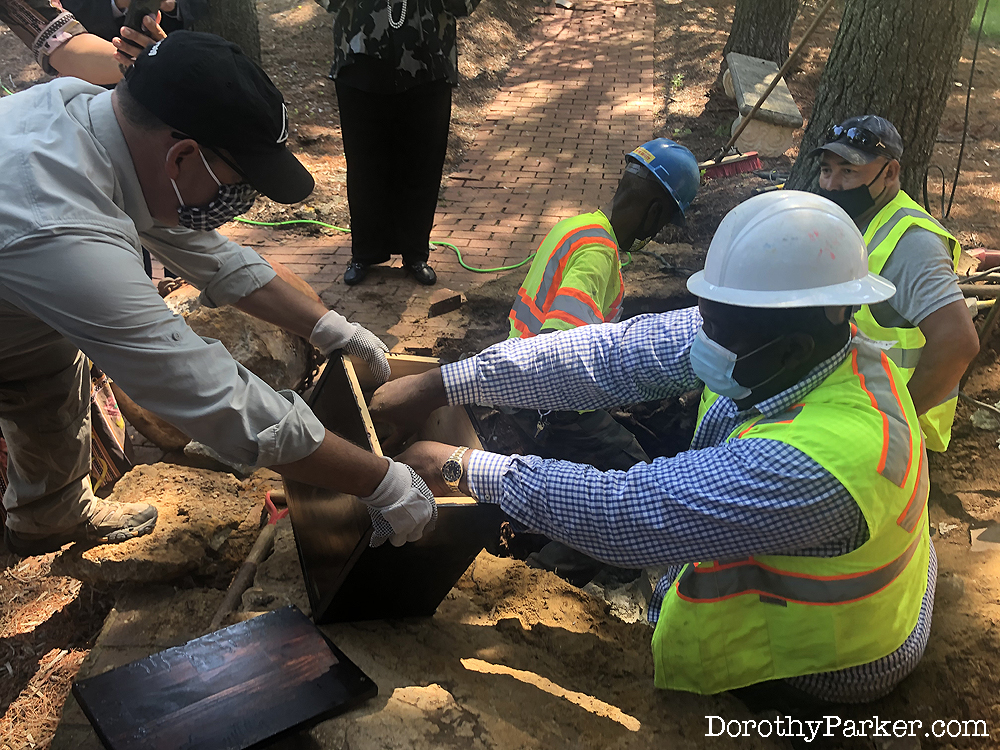
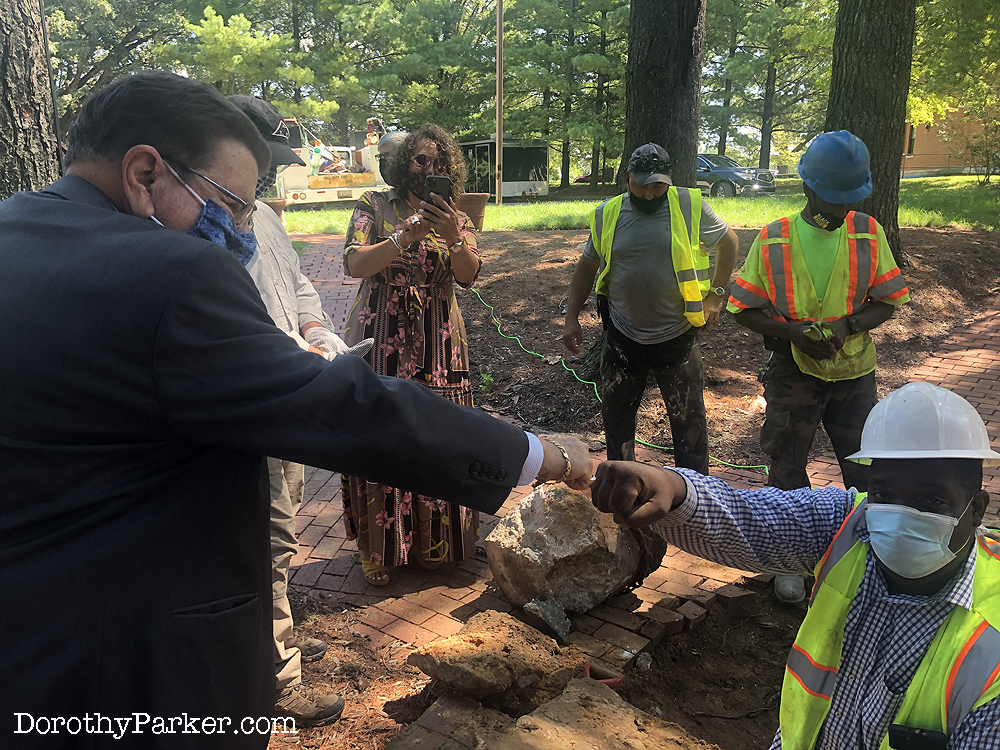
The urn was removed from the garden on August 18 by a team of three workers headed by Robert Harris of Gambino Construction. In a ii½ hr projection, the urn was taken out of the memorial garden the NAACP has lovingly maintained for almost 32 years. It was underneath hundreds of pounds of bricks, cement, and globe. A cursory ceremony was so held nether the auspices of the NAACP. Janette McCarthy Louard, NAACP deputy general counsel, led with remarks saying that Mrs. Parker was returning home. In a poignant bear upon, the same rabbi who attended the ceremony to inter the cremains in 1988 returned to watch them come out. Rabbi Floyd Fifty. Herman, of Har Sinai Congregation, a Reform Jewish synagogue located in Owings Mills, Maryland, served as the congregation's rabbi from 1981 to 2003, and now serves in emeritus status. He said the Kaddish. I served every bit the Rothschild family representative, accepted the cremains, and escorted them back to New York.
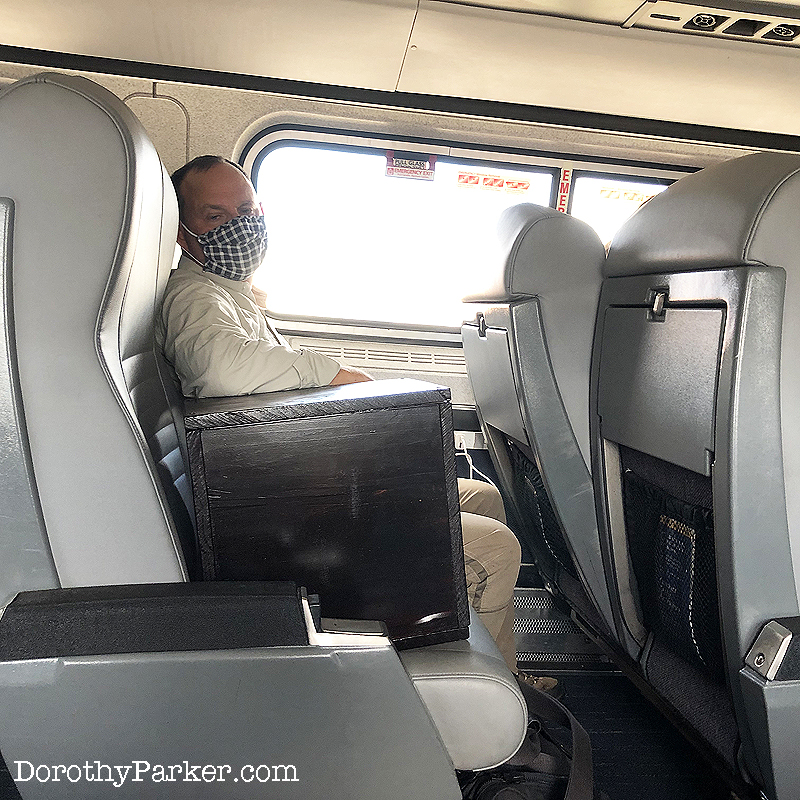
Dorothy Parker'south cremains left Maryland on Amtrak Railroad train 94 from Baltimore Penn Station and arrived at New York Penn Station. After a few nights back on the Upper West Side, the urn was carried from Manhattan and brought to Woodlawn Cemetery.
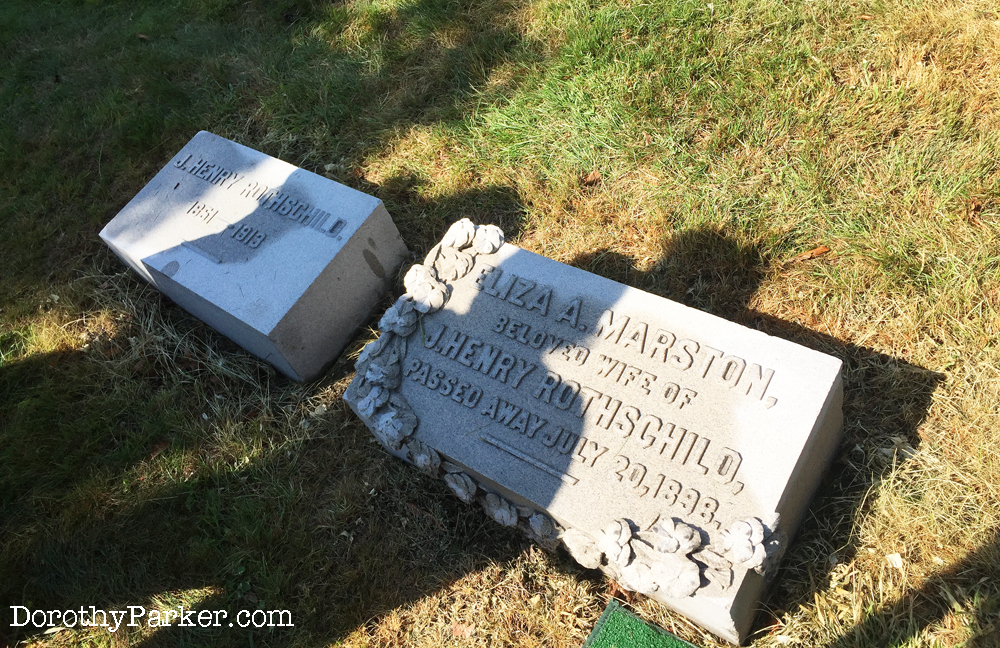
The plot contains her female parent, Eliza Rothschild, who died in 1899 at age 44; her father, Jacob Henry Rothschild, who died in 1913 at age 62, and her maternal grandparents, Ellen C. Marston and Thomas P. Marston. Mrs. Parker is buried closest to her mother. The location is the Myrtle Plot on White Oak Avenue (click hither for how to reach the cemetery and plot today).
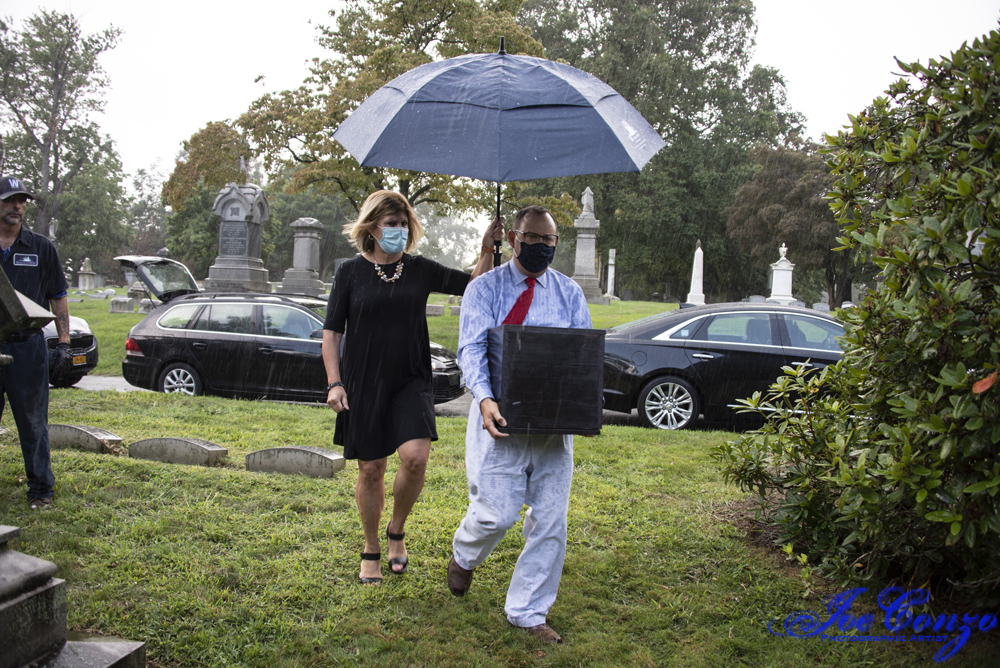
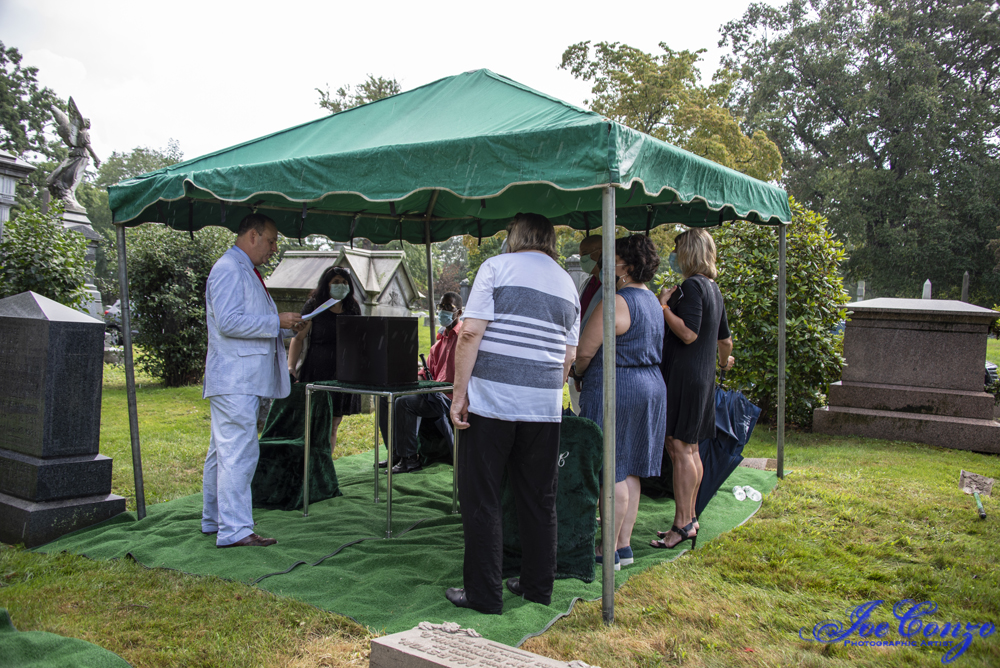
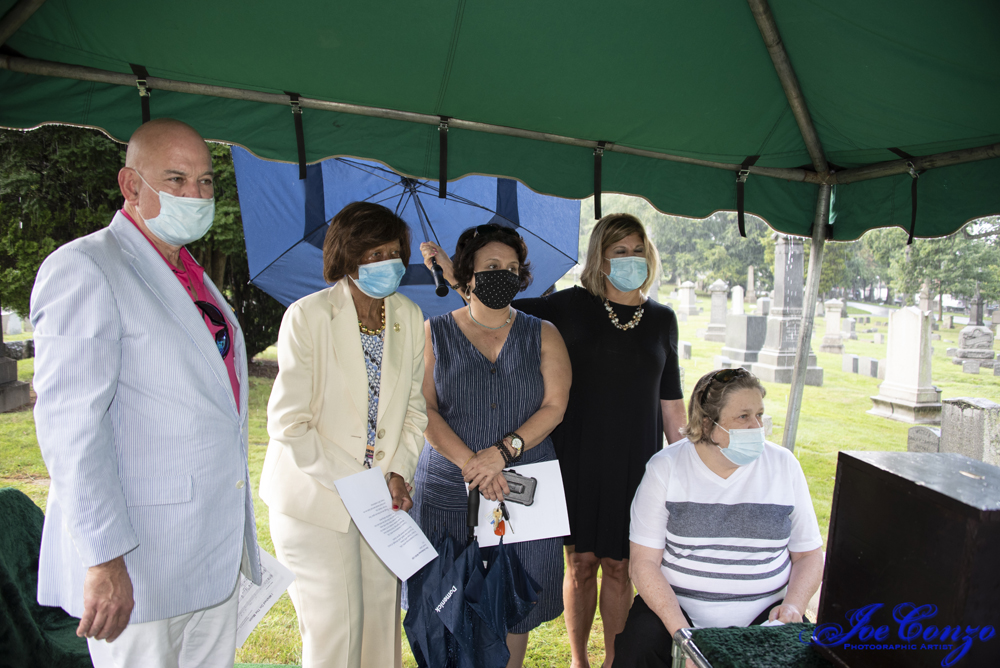
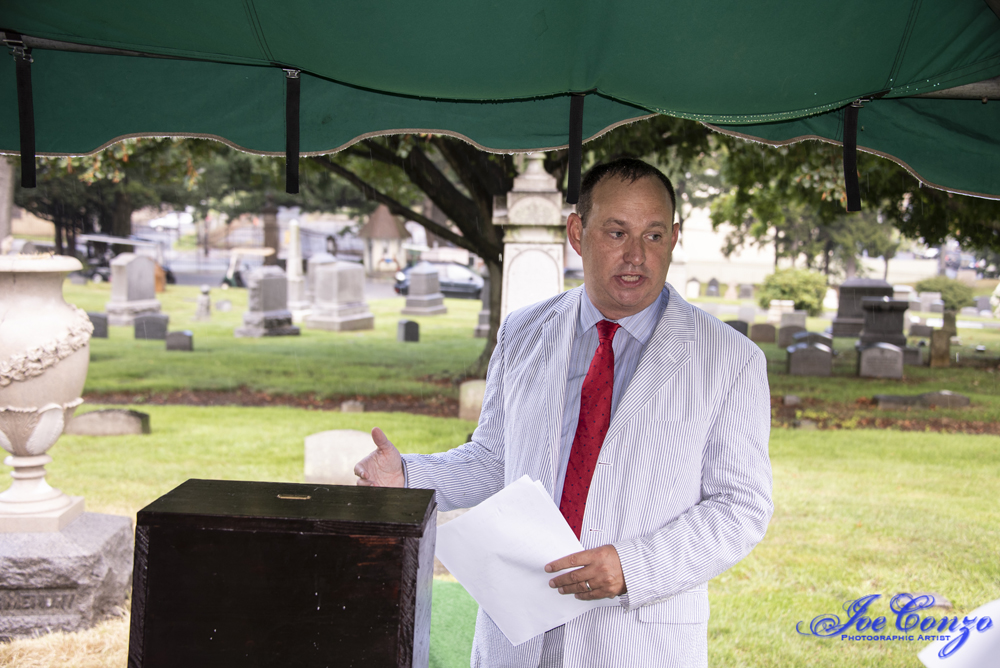
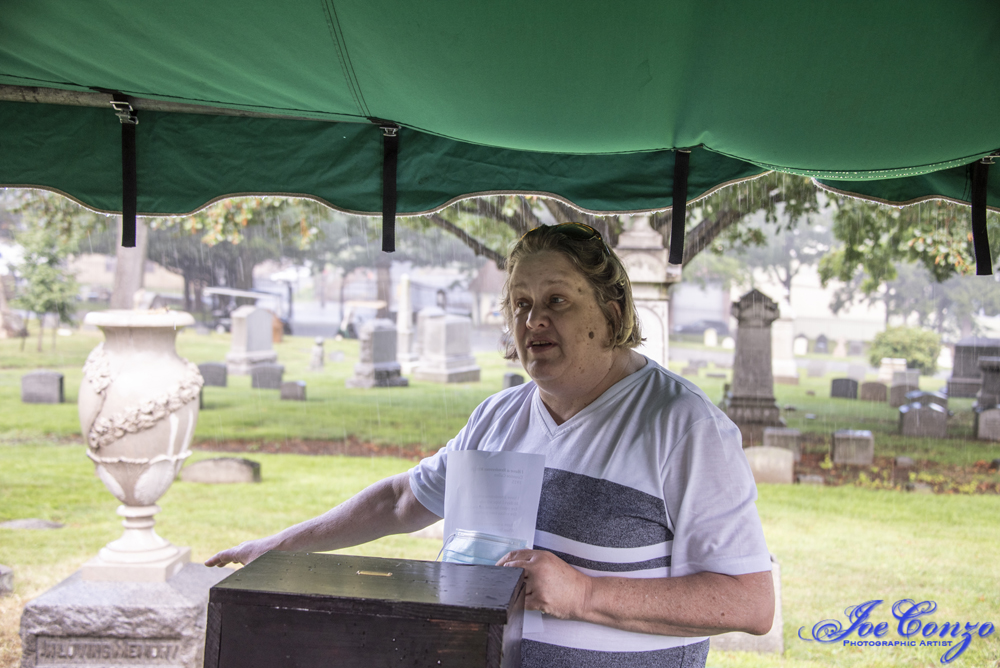
The small ceremony on August 22 was attended by 12 people. Susan Olsen, the historian at Woodlawn Cemetery whom I accept been working with since 2006, was the commencement to speak. She welcomed Dorothy Parker to her new final resting place.
"Today is one of the nigh corking days as we bring somebody back," Olsen said. "I have served equally the historian for Woodlawn for almost 20 years. What I've learned, in Dorothy Parker's era, the Algonquin era, was Woodlawn was the place to be. We were the well-nigh famous cemetery in the earth. If you died in New York, even if you were an opera star or phase star, before you went back to Poughkeepsie with your family, the funeral was held hither. Many of the literary and theatrical crowd whose funerals were held at the Little Church building Around the Corner, you were brought to Woodlawn, put into a receiving vault, and then that your obituary said, 'Going to Woodlawn Cemetery.' Many of Parker's contemporaries, those who she had accolades for and barbs for, and cocktails with, are here at Woodlawn. She has finally come up home not merely to be with her family unit, but also to be with the people that she loved, criticized, supported, and she saluted in her days at the Algonquin."
"For us, we live in an Ancestry.com era as more and more people are researching their history and their lineage. And I can't say plenty about the family. You cannot be cached hither unless you fill up out the paperwork that proves you take the correct to ownership as 1 of the descendants. So nosotros worked with her relatives to make certain that they could bear witness that they were the descendants of the individuals who are buried here. And then they could sign off on Dorothy coming home. Fortunately though in Dorothy's lifetime she had signed off that she was actually a lot owner… Nosotros pulled out all the onetime paperwork. We know it was e'er her intent to be here. She would not take filled out an ownership affidavit, declaring her as a current owner, unless information technology was Dorothy's intent to be here. She signed off on her parents being buried here, she knew this was her family, and I recall that's i of the most endearing things to me. To have such a colorful grapheme who did all these celebrated things during her life, only when it came to the end she wanted to be with her family."
"I can't say plenty about Kevin, endearing, and making this happen, information technology has been a long haul to get this going. I think of the challenges the NAACP has had in receiving an urn in the era of cremation. Nosotros take lots of people who go, 'Now what do I do with information technology? Why did we get this?' The challenge of honoring somebody who was so respectful of the cause she gave her funds to, believed in, and what do you do with cremains when you are not a cemetery. To the NAACP, our hats are off to you for accepting that claiming, and working with Kevin and the family to do the right matter. I'one thousand so glad everyone is gathered today. I'one thousand sure she will go an outstanding marker. The biggest claiming is what quote do you put on Dorothy Parker's grave. And I don't know how and who will select that. Many of our celebrated figures, like Countee Cullen, there'due south no passages from his poems; Duke Ellington'south songs are not on his grave. But I don't think Dorothy can exist laid to rest without a quote. I want to give thanks all of yous for coming together today, specially Kevin and the NAACP, because you're the ones who made it happen and brought her dwelling."
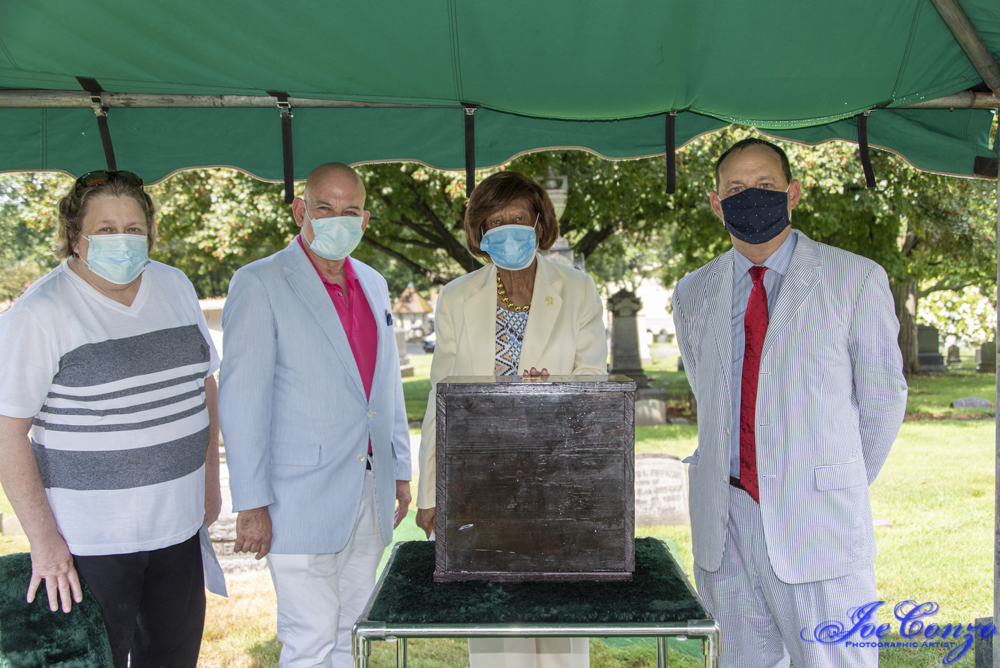
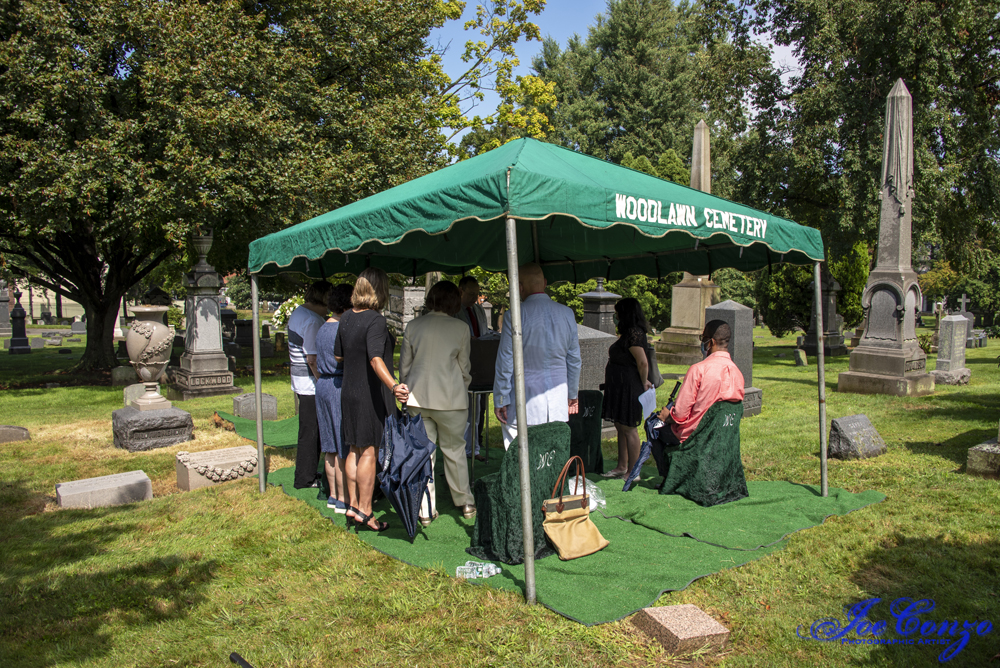
It was a big honor to welcome Dr. Hazel Northward. Dukes to Woodlawn. She is President of the NAACP New York State Conference and a member of the NAACP National Board of Directors, a fellow member of the NAACP Executive Committee and well every bit an active member of diverse NAACP board sub-committees.
"On behalf of our chairman, Mr. Leon Russell, and our president, Derrick Johnson, who could non exist here today, I am the only living one-time president of the national board of directors. And for Mrs. Mildred Roxborough an integral function of the NAACP could not come today. But she knows the whole history. I was thinking terminal nighttime, as nosotros expect at New York and the world, the Clan was founded hither, on Fifth Avenue, so it is no coincidence that she wanted to come abode to New York. It'south our dwelling house too, founded here in 1909. So we are hither bringing this great, honorable, adult female who gave to the cause when it was not popular. It was not popular at the time that Dorothy Parker began to associate with the NAACP. At that place were many names chosen as we come across today (such as) communists. People who wanted to assist those who were less fortunate. I'm honored to be hither today to welcome her home, back to New York, the founding of the NAACP. I'd like to say to the family and to Kevin thank you so much for including u.s.. And nosotros endear her, so much, at the NAACP. The late Dr. Benjamin Hooks always said, 'Whatever you practice, don't bother Dorothy Parker.' He fabricated that very clear. Nosotros welcome yous dwelling, and we thank you lot for all you've done, and your spirit volition continue to lead the states in the country to exist better than what we have been and what we know we can be."
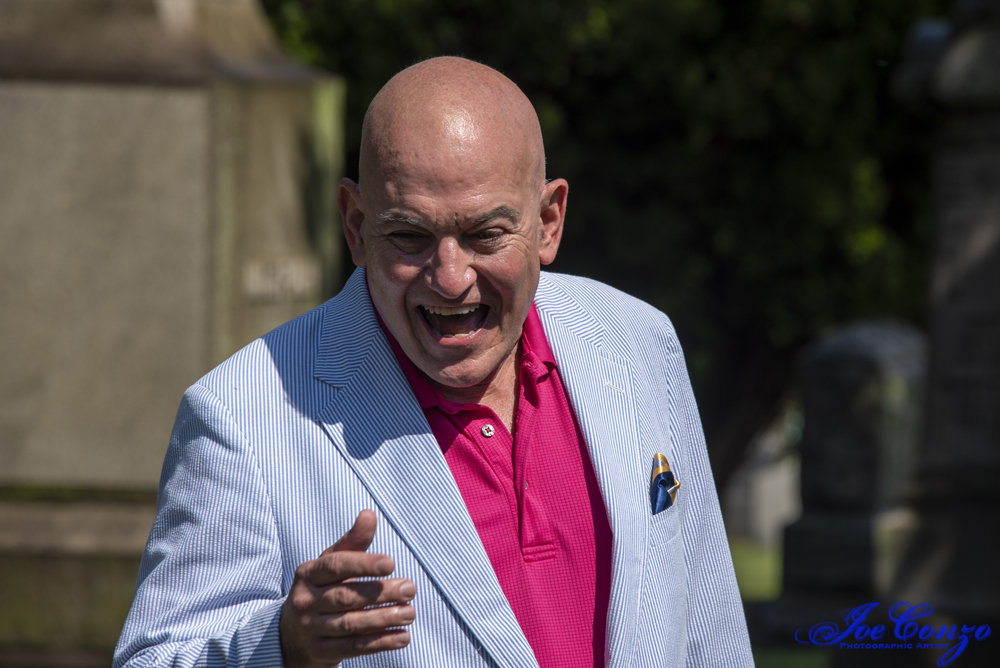
To represent the Dorothy Parker Lodge, founded in 1999, composer-performer Bill Zeffiro performed one of the few songs Dorothy Parker wrote. "Mrs. Parker didn't write many lyrics," he said. "She wrote–information technology depends on which one of our song maven folks you talk to–ii or iii songs. But she was a very good lyricist. I think this her most famous, it was written in 1934 with composer Ralph Rainger, chosen I Wished on the Moon."
I wished on the moon
For something I never knew
I wished on the moon
For more than than I ever knew
A sweeter rose, a softer heaven
An April days that would non dance abroad
I wished on a star
To throw me a beam or 2
I begged on the stars
And asked for a dream or two
I looked for every loveliness
It all came true
I wished on the moon for you lot
I wished on the moon
For something I never knew
Wished on the moon
For more I e'er knew
A sweeter rose, a softer sky
An April days that would not trip the light fantastic toe abroad
I wished on a star
To throw me a beam or two
I begged on a star
And asked for a dream or two
I looked for every loveliness
It all came true
I wished on the moon
Wished on the moon
Wished on the moon for you lot
I then spoke to the small grouping and gave appreciation on behalf of the family who could not travel due to the pandemic. I decided to read a option from "My Home Town," which Parker wrote for McCall'south in 1928. To me, it is a more powerful statement about loving New York City than even E.B. White's classic "Here is New York." A role of the essay concludes with:
London is satisfied, Paris is resigned, simply New York is always hopeful. E'er it believes that something especially expert is about to come off, and it must hurry to meet it. There is excitement e'er running in its streets. Each day, as you become out, you feel the footling nervous quiver that is yours when you sit in a theater only before the curtain rises. Other places may give you a sweet and soothing sense of level; merely in New York, there is always the feeling of "Something's going to happen." It isn't peace. But, you know, you practise get used to peace, then quickly. And you never go used to New York.
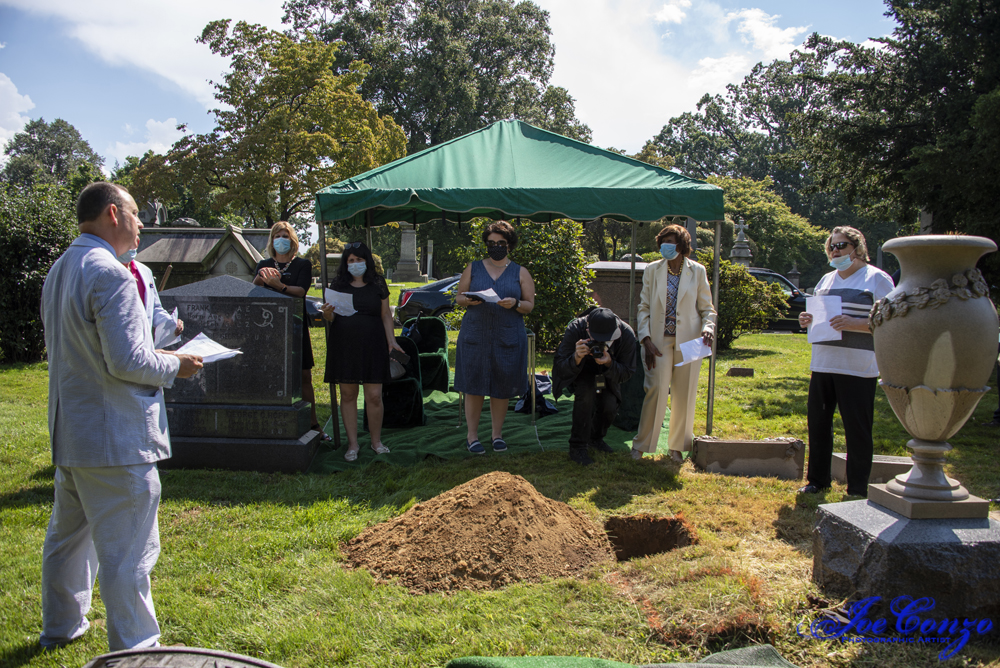
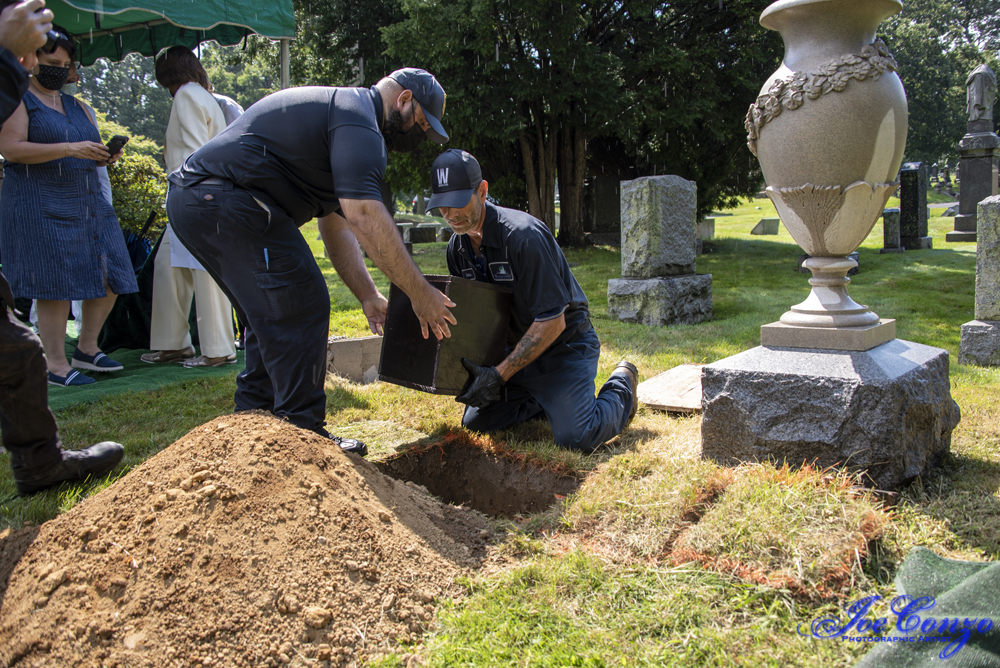
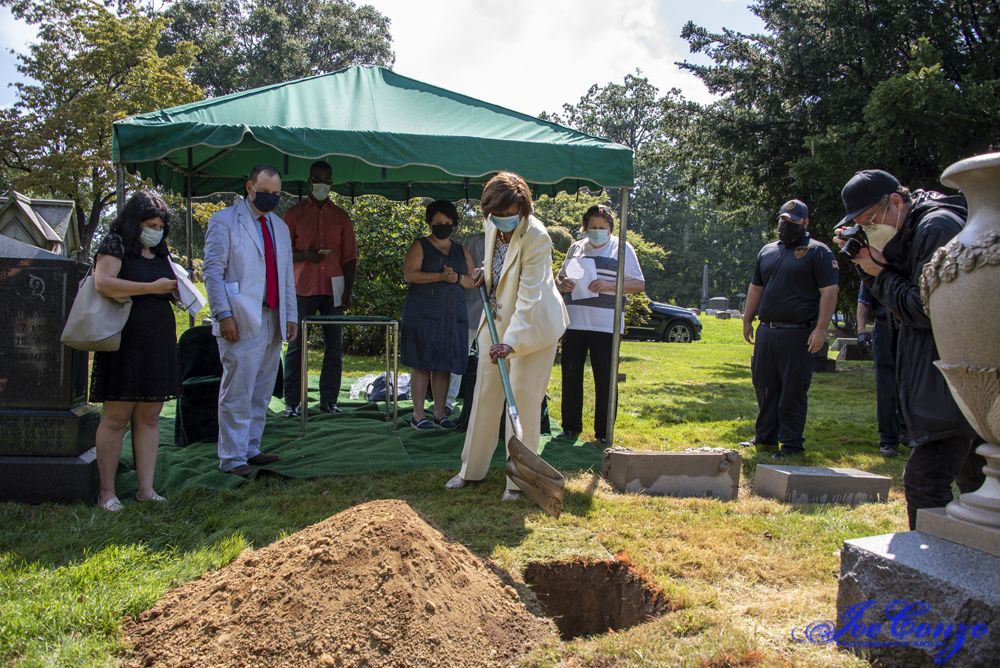
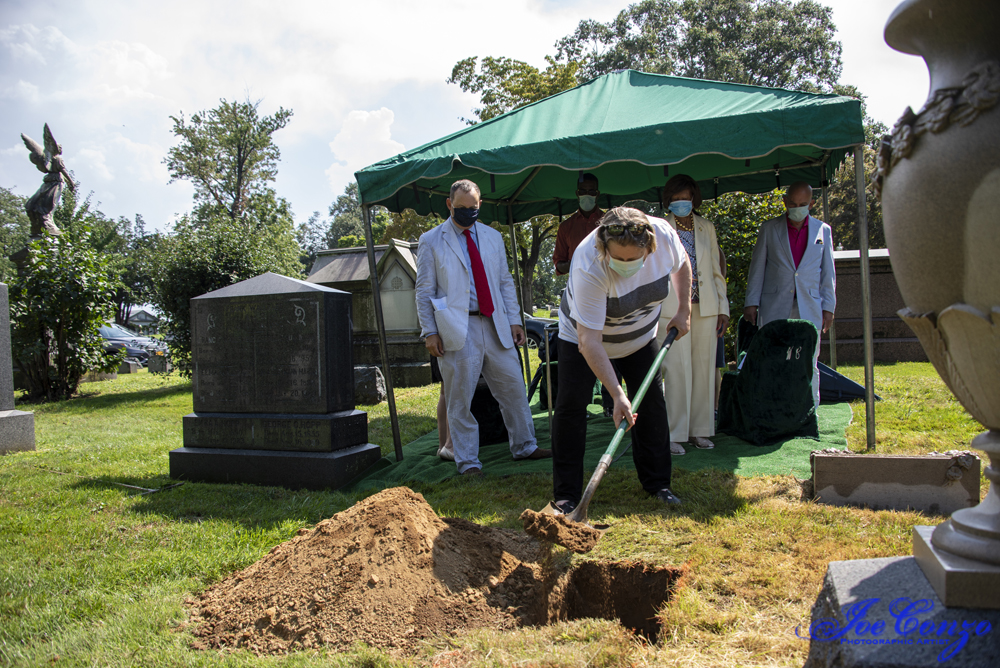
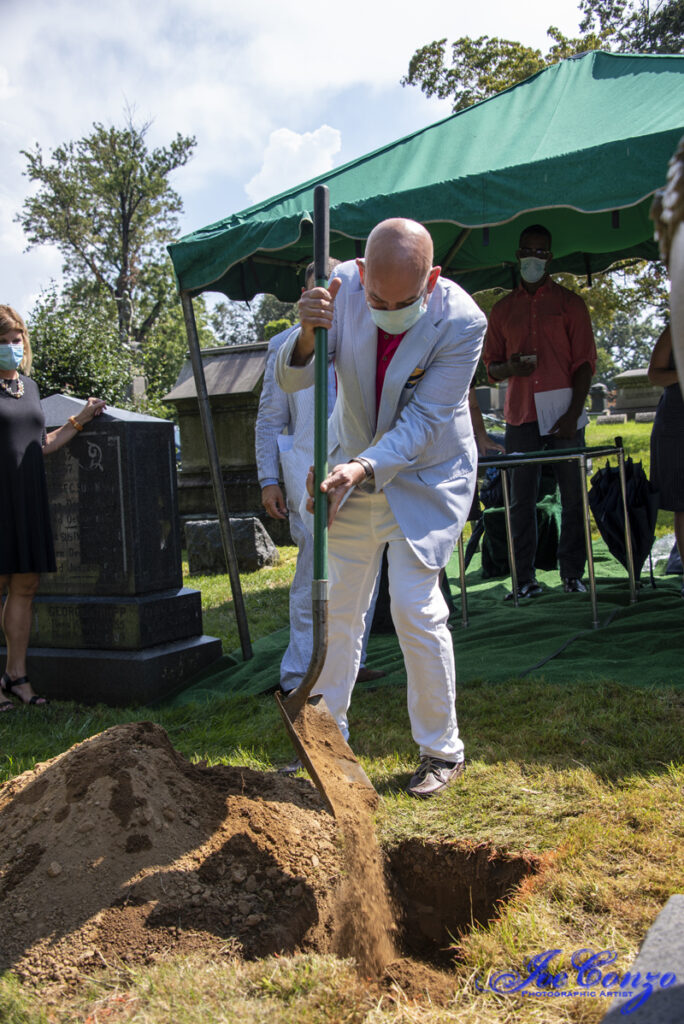
At this point, the constant drumming of the raindrops on our footling Woodlawn tent ceased. I would like to say a double rainbow came out and landed on the grave, only that did not happen. What we did next was very special. The hole in the footing had been covered by the cemetery crew, which stood past in the rain. Information technology was uncovered and a modest pile of earth was next to it. The hole is immediately to the right of Eliza Rothschild, who died when when Dorothy was a month shy of turning five years old. The pine box containing the urn was lowered into the ground. It had been my idea to ask those gathered to throw a handful of dirt onto the grave, following the Jewish tradition, fifty-fifty though Parker wasn't actually a Jew. It would exist nice. But at the last moment we decided to utilize a shovel, which was waiting, of course. Offset was Hazel Dukes representing the NAACP. Then Susan Olsen, to welcome Parker to Woodlawn. Bill Zeffiro represented all of the scores of Parker fans with a shovelful. Then I was last, and placed six shovels in, one for each of the Rothschild descendants in upstate New York who were not there, and finally one for myself.
But the side by side role was equally poignant to wrap up the small ceremony. I didn't think a Bible verse of quotation would ring true for Parker, and then I thought a poem from a contemporary poet would be appropriate. And actually the only i to come to mind was Countee Cullen, also a New Yorker, from Harlem, and interred in Woodlawn Cemetery. Both he and Parker are in the New York Land Writers Hall of Fame. I passed around the poem and together nosotros recited:
I Have a Rendezvous With Life
Countee Cullen
1915
I take a rendezvous with Life,
In days I hope will come up,
Ere youth has sped, and strength of mind,
Ere voices sweet abound dumb.
I have a rendezvous with Life,
When Spring's commencement heralds hum.
Sure some would cry information technology'southward improve far
To crown their days with slumber
Than face the route, the wind and rain,
To heed the calling deep.
Though moisture nor blow nor space I fearfulness,
Yet fear I deeply, too,
Lest Expiry should meet and claim me ere
I keep Life's rendezvous.
To conclude the twenty-four hours, and since it was besides Dorothy Parker'south birthday, I asked Bill to perform the song he wrote in 2008 almost her, Happy Birthday, Mrs. Parker. (Listen to a stream of it hither and read the lyrics).
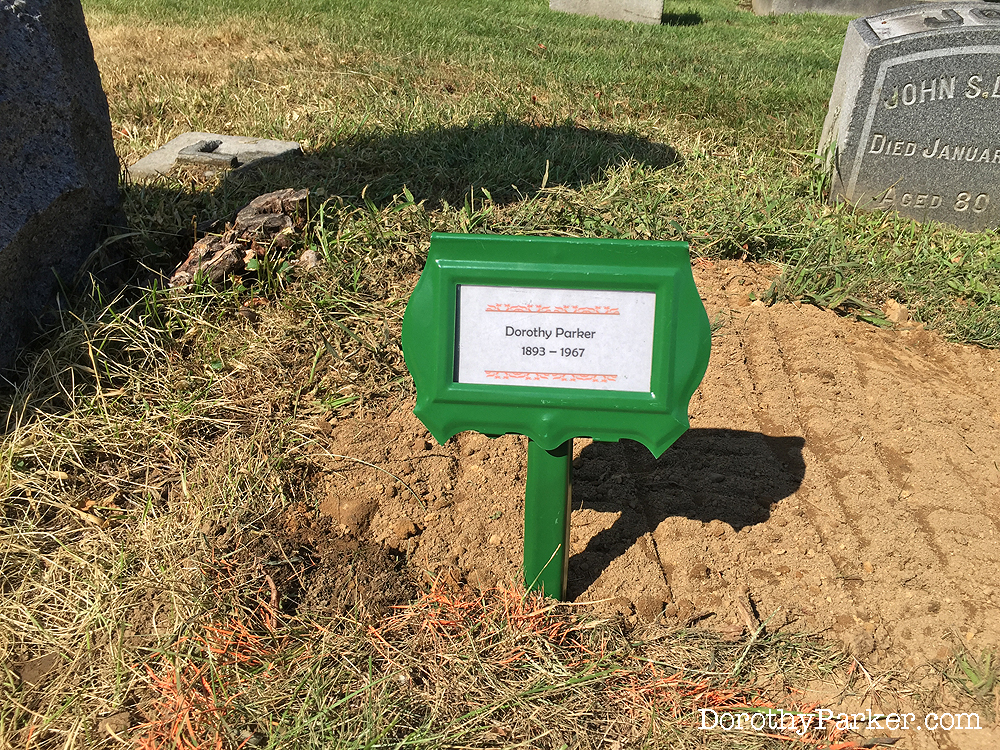
By now the sun was in total sunshine. It was a blazing warm summer afternoon. The grave was covered with fresh clay, and a temporary grave marker was placed by the Woodlawn staff. Information technology reads:
Dorothy Parker
1893-1967
The next steps will exist the gravestone unveiling, hopefully in 2021.
Source: https://dorothyparker.com/2020/09/homecoming.html
0 Response to "Dorothy Parkers Ashes Could Be Again."
Enviar um comentário